
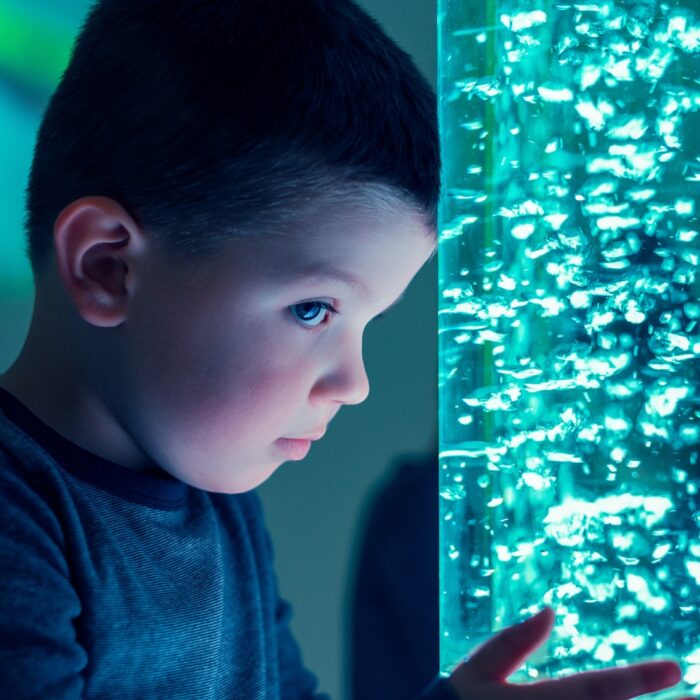
Sensory processing affects how people experience the world around them. For many people with developmental disabilities, sounds, lights, smells, textures, and movement may feel stronger, weaker, or different. Small changes to the environment can make daily activities more comfortable and easier to join.
What is Sensory Processing?
Sensory processing is how the brain and body take in information from the senses and respond to it. People may be:
- Hypersensitive: responding strongly to sounds, lights, textures, smells, or movement.
- Hyposensitive: responding minimally or looking for stronger sensory experiences, such as bright lights, loud sounds, or deep pressure.
- Sensory seeking: actively looking for input that feels regulating or enjoyable.
Studies show that about 74 percent of autistic people experience sensory differences. These differences can impact everyday activities and participation in their communities. Individuals with other developmental conditions, like ADHD, may also experience sensory differences.
Examples of Sensory Differences
People may experience one or more sensory differences. These include:
- Auditory: Distress from loud or layered sounds, or enjoyment of very loud noise.
- Visual: Sensitivity to bright light or clutter; or preference for bright or flashing lights.
- Tactile: Avoiding certain clothing or textures, or not noticing pain as much as others.
- Smell/Taste: Sensitivity to strong smells or certain food textures, or chewing on non-food items.
- Proprioception/Vestibular: Sensitivity to movement, spinning, bumping, or seeking deep pressure.
A typical everyday environment often has many sensory experiences at the same time. These experiences may include background noise, lighting, movement, and smells. Together, these factors can influence a person’s attention, comfort, and stress levels.
What Helps a Person with Sensory Differences?
Creating sensory-friendly spaces can make it easier for people to take part in everyday activities. Examples may include:
- Auditory supports: reduce background noise and offer quiet spaces or noise‑canceling headphones
- Visual supports: reduce clutter and adjust lighting
- Tactile supports: provide flexible seating for movement
- Smell/Taste supports: improve ventilation, discourage strong scents, and offer food options that match a person’s needs and preferences
- Proprioceptive/Vestibular: offer movement breaks, provide areas for rocking, stretching
Sensory differences affect people in different ways. Small changes at home, in school, at work, and in the community can make it easier for people to feel comfortable and promote inclusion. Understanding sensory needs can help create spaces where everyone feels they belong.